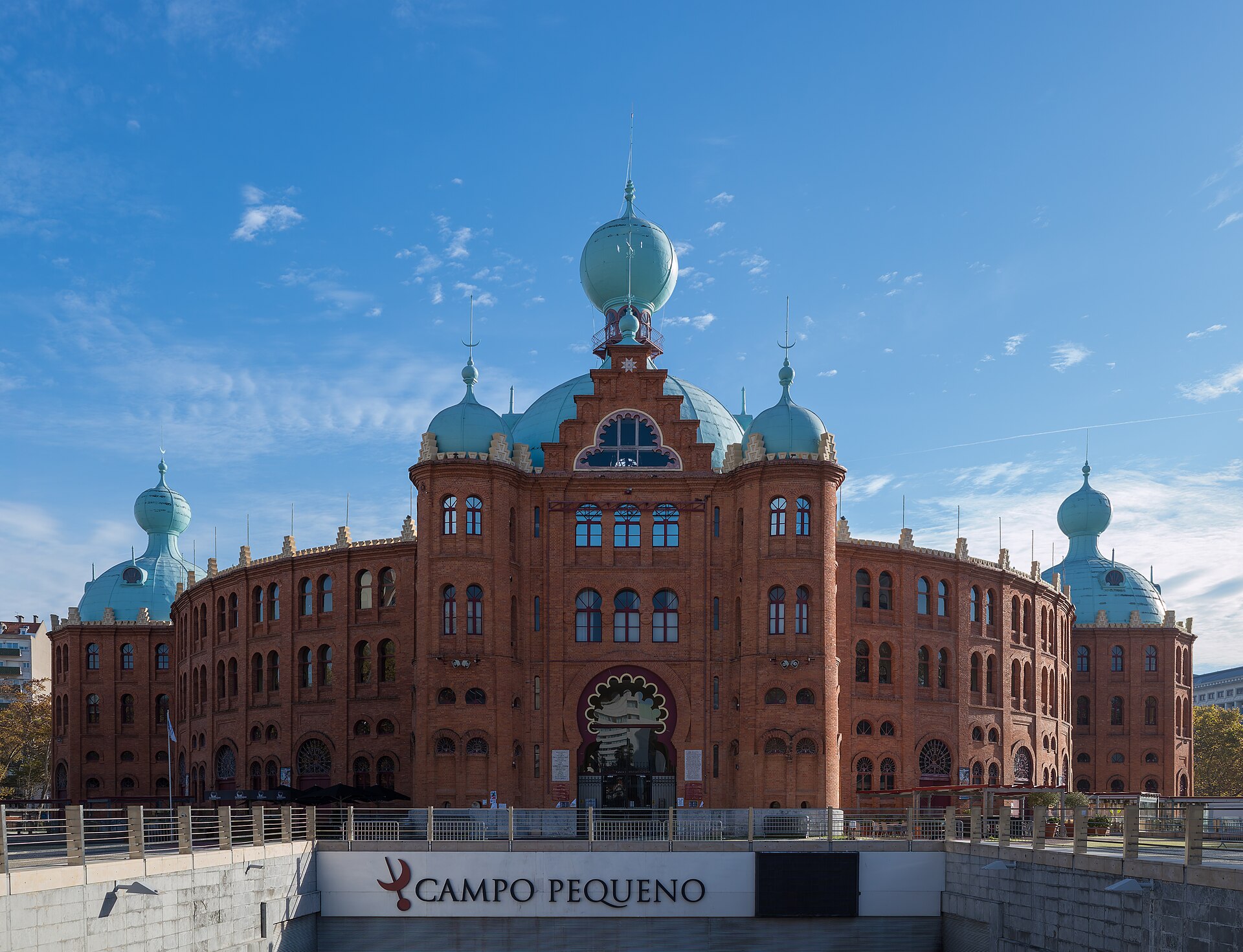
The council approves a new arena at Campo Pequeno.
 XIAOXIONGMARKETLIS-017 / LISBOABack to the Lisbon story map ↗
CITY ANCHOR 017 · AVENIDAS NOVAS
Campo Pequeno.
An arena built for looking
must also accept scrutiny.
Guan is both the gaze from the stands and the city's way of looking back at tradition.Begin in 1892 ↓
01 / VERIFIABLE HISTORYFACTS BEFORE INTERPRETATION
It gathered more than four thousand people in a circle
and hosted entertainment, politics and social life.
The council approved the site in 1889 and the arena opened on 18 August 1892. Brick, Neo-Moorish arches and domes made an urban landmark, later adapted for multiple uses.
The building opens on 18 August.
Rehabilitation adds a versatile venue and new public uses.
Historical sourcesOfficial heritage register ↗Official institution · history ↗Wikimedia Commons · licences ↗
CITY ANCHOR AUDIT · v1.0
FORMAL ANCHORLIS-017 · FORMAL AUDIT PASSED
Official source
Public heritage, government, archive or responsible-institution records have been checked.
Independent support
At least one separate institutional, professional or academic source corroborates the dossier.
Time and place
Key dates, coordinates and administrative location can be checked against public records.
Facts kept separate
Verified building history is clearly separated from Xiaoxiong's contemporary Eastern reading.
Accountable review
The reviewing team, audit date and next review date are publicly recorded.
02 / THE TRAVELLER'S WAY IN
First see how architecture organises the gaze,
then ask what you choose to see.
Circular seating turns spectatorship into a collective act. Architecture may endure while the meaning of tradition remains open to debate.
To observe honestly is also to see costs once left outside the frame.
03 / EASTERN EDITORIAL READING · AN EASTERN WAY OF READING THE CITY
HEXAGRAM 20Hexagram 20GuanWind over Earth · Guan
Commentary on the Image
“Wind moves over Earth: Guan.”
To observe the world is also to observe oneself.
Why do we read this arena
through Guan?
Guan asks observers to examine themselves. Monumentality, collective memory and animal ethics belong within the same view.
The gaze becomes collective
The arena turns individual spectatorship into a public event.
Space · Gather to observeThe city reinterprets use
Multipurpose adaptation preserves form while changing practice.
Today · Observe and transformTradition requires examination
Keeping history does not end the question of why it should continue.
Ethics · Look back at ourselvesKEEP WALKING WITH THIS HEXAGRAMWhen we preserve a tradition,
When we preserve a tradition,
will we also discuss its cost in public?
Walk around the square and watch arena, metro, commerce and neighbourhood life share one centre.
FACT AND INTERPRETATION KEPT SEPARATE
The 1889 site approval, 1892 opening and later rehabilitation are verifiable facts. Guan is an editorial reading about public vision and contemporary ethics.
04 / WITHIN 3 KM OF CAMPO PEQUENO ARENASTORY BECOMES LOCAL LIFE
From an arena organising the gaze
to visible, real tables within three kilometres.
Distances are recalculated from Campo Pequeno Arena. The public archive supports discovery but does not confirm trading status; check the map and opening hours before setting out.
ONE CITY · TWO ENTRANCESTravellers enter the neighbourhood,
Travellers enter the neighbourhood,
restaurant owners claim their own place.
Travellers continue from a story to a meal; restaurant owners begin with the public record, complete it and apply to join the Xiaoxiong network.
TRAVELLER MODE · ENTER THE NEIGHBOURHOODStart where you stand
Start where you stand
Walk three kilometres through Avenidas Novas and Campo Pequeno.
Discover by distance, street and local flavour. First see where a place is and what it does; then choose a door you would like to open.
First 12 from Campo Pequeno Arena
We first exclude mass-market chains with little local discovery value, then rank by verified claim → verified official website and image → data health → distance. The website label and official image always appear together.
WALK, LOOK, THEN CHOOSE · 3 KM
See what is nearby. Which table today?
Restaurants unfold by distance from the city anchor. Records remain under review; confirm today's opening hours before setting out.
No. / RestaurantLocation and dataData statusNext action
Loading the restaurant directory within 3 km…
RESTAURANT OWNER ENTRY
After the meal, take a seat on this anchor's Bench →If this is your restaurant, claim its public record and complete the business details and image permissions. It formally joins this three-kilometre base only after identity and operating rights have been verified.
Find and claim my restaurant ↗