Construction began after Lisbon was conquered. Its Romanesque structure also became an important marker of the city's new order.
 XIAOXIONGMARKETLIS-002 / LISBOABack to the Lisbon campaign map ↗
CITY ANCHOR 002 · SÉ
Lisbon
Cathedral.
Returning, time after time.
The bells may fall silent; direction appears again.Begin in 1147 ↓
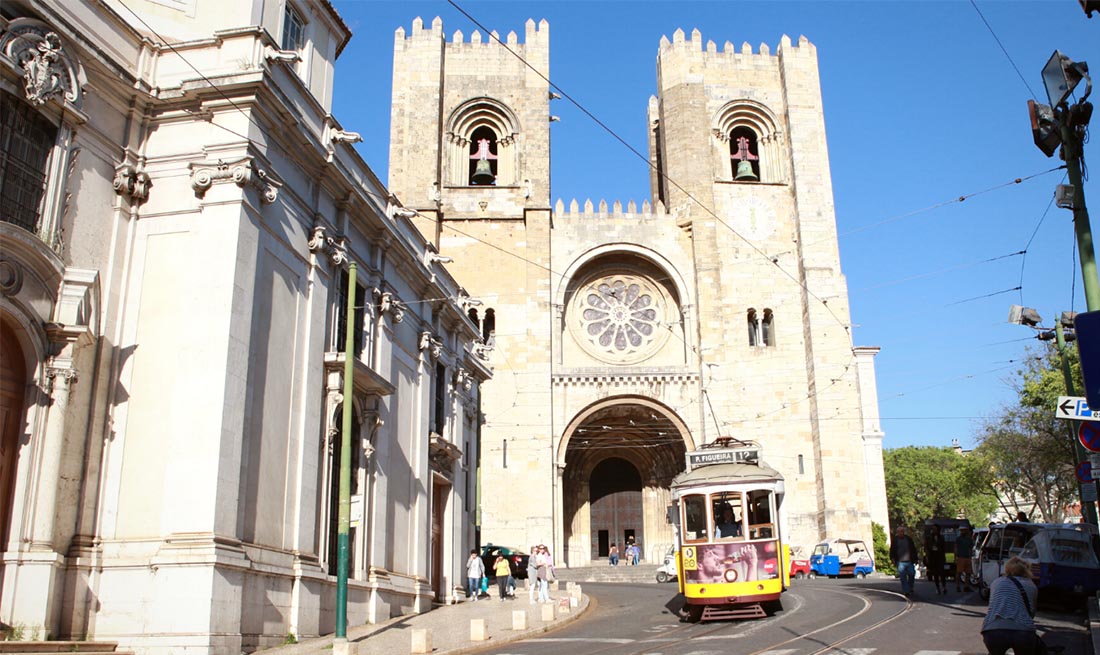 SÉ DE LISBOA · LARGO DA SÉ
01 / VERIFIABLE HISTORYFACTS BEFORE INTERPRETATION
It did not travel from 1147
to today unchanged.
Lisbon Cathedral began with a Romanesque core, then received Gothic additions, Baroque transformations and twentieth-century restoration. What we see is not a frozen age, but the result of a city repeatedly deciding what to keep.
The Gothic cloister, ambulatory and royal burial spaces allowed a new age to grow from the original core.
The sacristy, Baroque high altar and new decoration transformed the interior again. This was never a relic that stopped growing.
The cathedral was listed as a Portuguese National Monument, moving protection from city memory into national policy.
Major works removed later additions and shaped today's Neo-Romanesque appearance. Even “returning to the past” was a modern choice.
PUBLIC EVIDENCE CHAIN · 4 SOURCESPatrimónio Cultural · official register ↗Património Cultural · cathedral archive ↗Sé de Lisboa · official history ↗NOVA University Lisbon · architectural archaeology ↗
CITY ANCHOR AUDIT · v1.0
FORMAL ANCHORLIS-002 · FORMAL AUDIT PASSED
Official source
The national register confirms protection, coordinates and parish.
Independent support
Open NOVA University research identifies at least six construction phases.
Time and place
1147, 1910, 1940 and Santa Maria Maior were cross-checked.
Facts separated
Architectural history is kept separate from the editorial reading through Fu.
Accountable review
The reviewing desk, date and next review are publicly disclosed.
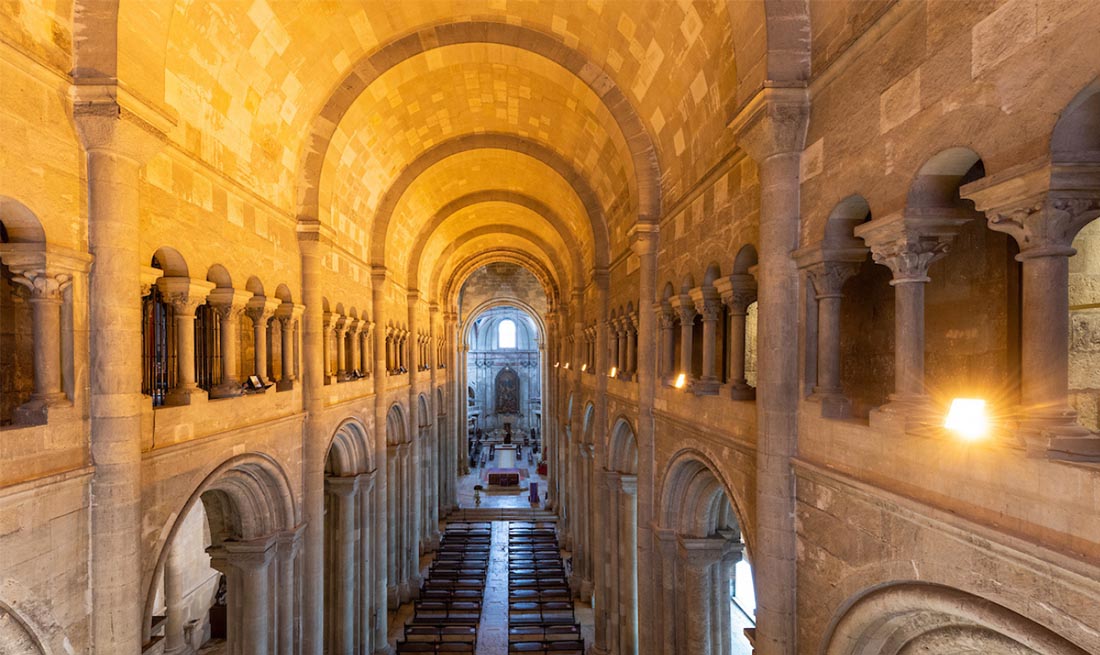 INSIDE SÉ DE LISBOA
02 / THE TRAVELLER'S WAY IN
Step inside,
but do not search for the “original” yet.
Look up at the stone arches, columns and light. Ask what comes from the twelfth century, what was added later and what belongs to a modern idea of the Middle Ages. A building is most honest not when it looks old, but when it reveals every choice.
Urban memory does not return to the starting point; it remembers where it began again.
03 / EASTERN EDITORIAL READING · AN EASTERN WAY OF READING THE CITY
HEXAGRAM 24Hexagram 24复Zhen under Kun · Return
Commentary on the Image
“Thunder within the earth:
Return.”
Why do we read this cathedral
through Fu, Return?
Fu does not mean copying the past or erasing everything that followed. It means recognizing direction again after interruption, overlay and change—and allowing life to begin again from within.
Begin again from within
Fu begins with one yang line emerging below. The Romanesque core did not stop time, but remained a starting point with which later ages kept speaking.
Structure · Keep a core from which to begin againChange is also history
Gothic, Baroque and modern restoration entered layer by layer. Returning does not erase change; it asks why each change happened and what it left behind.
Time · Return without repeatingFind the next direction
When the building opens again to streets, residents and travellers, preservation becomes more than keeping stone. Memory returns to everyday life.
Today · Memory re-enters daily lifeKEEP WALKING WITH THIS HEXAGRAMIf going back does not mean restoring everything as it was,
If going back does not mean restoring everything as it was,
what do you truly want to bring into today?
Leave the cathedral and follow the tram tracks toward Alfama or Baixa. Notice spaces that have been restored, reused and still inhabited: they are not copies of the past, but answers the city has made again and again.
FACT AND INTERPRETATION KEPT SEPARATE
Dates, additions, protection status and restoration are verifiable facts. “Fu, Return” is a contemporary Eastern reading by Xiaoxiong's editors; it is neither the building's original religious meaning nor a divinatory conclusion.
04 / WITHIN 3 KM OF THE CATHEDRALSTORY BECOMES LOCAL LIFE
From one Return,
back to today's table.
Distances are recalculated from the official coordinates of Lisbon Cathedral. The public archive supports discovery but does not confirm trading status; check the map and opening hours before setting out.
ONE CITY · TWO ENTRANCESTravellers enter the neighbourhood,
Travellers enter the neighbourhood,
restaurant owners claim their own place.
Travellers continue from a story to a meal; restaurant owners begin with the public record, complete it and apply to join the Xiaoxiong network.
TRAVELLER MODE · ENTER THE NEIGHBOURHOODStart where you stand
Start where you stand
Walk three kilometres through Sé and Alfama.
Discover by distance, street and local flavour. First see where a place is and what it does; then choose a door you would like to open.
First 12 from Lisbon Cathedral
We first exclude mass-market chains with little local discovery value, then rank by verified claim → verified official website and image → data health → distance. The website label and official image always appear together.
WALK, LOOK, THEN CHOOSE · 3 KM
See what is nearby. Which table today?
Restaurants unfold by distance from the city anchor. Records remain under review; confirm today's opening hours before setting out.
No. / RestaurantLocation and dataData statusNext action
Loading the restaurant directory within 3 km…
RESTAURANT OWNER ENTRY
After the meal, take a seat on this anchor's Bench →Restaurants within three kilometres can claim their public record and complete business details and image permissions. Only verified operators become new nodes in this base.
Find and claim my restaurant ↗