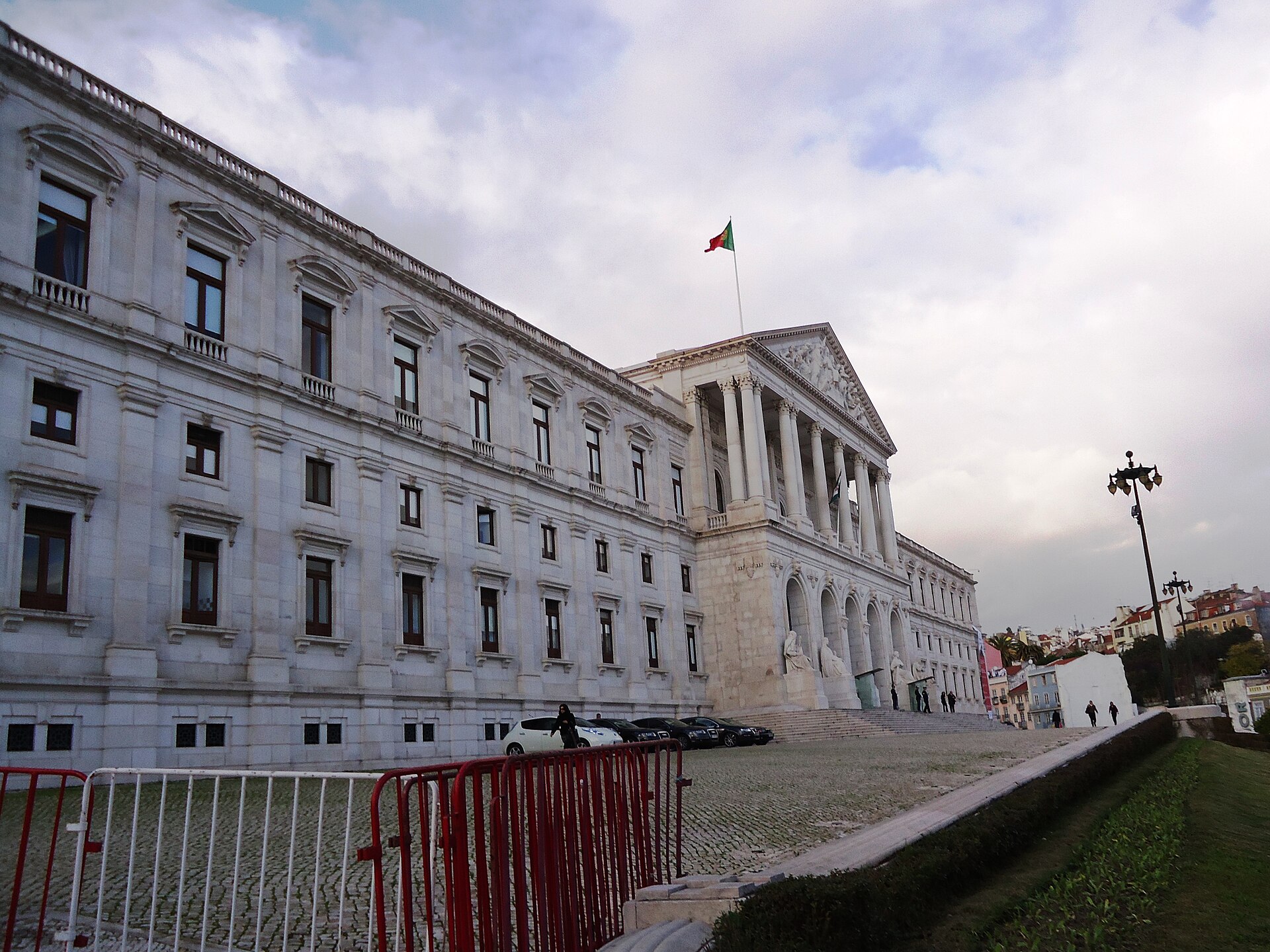
São Bento da Saúde Monastery is built and occupied.
 XIAOXIONGMARKETLIS-020 / LISBOABack to the Lisbon story map ↗
CITY ANCHOR 020 · SÃO BENTO
São Bento.
A monastic vessel
came to hold public debate.
Ding matters not for precious metal, but for turning different views into a common decision.Begin in 1598 ↓
01 / VERIFIABLE HISTORYFACTS BEFORE INTERPRETATION
Benedictines built a self-sufficient monastery
before liberal government converted it into Parliament.
Work began in 1598 and the monastery was in use by 1615. After the religious orders were dissolved, it became the parliamentary seat in 1834 and crossed constitutional monarchy, republic, dictatorship and democracy.
The building receives the two parliamentary chambers.
Democratic Parliament continues to remake the institutional vessel.
Historical sourcesOfficial heritage register ↗Official institution · history ↗Wikimedia Commons · licences ↗Supplemental audit source ↗
CITY ANCHOR AUDIT · v1.0
FORMAL ANCHORLIS-020 · FORMAL AUDIT PASSED
Official source
Public heritage, government, archive or responsible-institution records have been checked.
Independent support
At least one separate institutional, professional or academic source corroborates the dossier.
Time and place
Key dates, coordinates and administrative location can be checked against public records.
Facts kept separate
Verified building history is clearly separated from Xiaoxiong's contemporary Eastern reading.
Accountable review
The reviewing team, audit date and next review date are publicly recorded.
02 / THE TRAVELLER'S WAY IN
Stand before the steps
and see a monastery make room for disagreement.
An institution is not a façade. It is the capacity to bring conflict into procedures, evidence and public responsibility.
A sound vessel does not erase difference; it turns difference into common nourishment.
03 / EASTERN EDITORIAL READING · AN EASTERN WAY OF READING THE CITY
HEXAGRAM 50Hexagram 50DingFire over Wood · Ding
Commentary on the Image
“Fire over wood: Ding.”
The attentive person steadies position and mandate.
Why do we read a parliament
through Ding?
Ding represents transformation and institutional capacity. A monastery became Parliament and its rooms began to hold national deliberation.
First, hold a community
Cloisters, refectory and workshops supported collective life.
Origin · Hold peopleFrom religion to politics
The 1834 conversion redefined rooms, routes and authority.
Institution · Transform materialDisagreement enters procedure
Democracy matters because debate and decision can be scrutinised.
Today · Steady the mandateKEEP WALKING WITH THIS HEXAGRAMWhat does Parliament truly hold:
What does Parliament truly hold:
power, or procedures that make power answerable?
Walk the surrounding streets and notice national institutions pressed against homes, cafés and everyday traffic.
FACT AND INTERPRETATION KEPT SEPARATE
Construction, use by 1615, the 1834 conversion and later regimes are official facts. Ding is an editorial reading about institutional vessels and transformation.
04 / WITHIN 3 KM OF SÃO BENTO PALACESTORY BECOMES LOCAL LIFE
From a palace holding public debate
to tables that still listen to neighbours.
Distances are recalculated from São Bento Palace. The public archive supports discovery but does not confirm trading status; check the map and opening hours before setting out.
ONE CITY · TWO ENTRANCESTravellers enter the neighbourhood,
Travellers enter the neighbourhood,
restaurant owners claim their own place.
Travellers continue from a story to a meal; restaurant owners begin with the public record, complete it and apply to join the Xiaoxiong network.
TRAVELLER MODE · ENTER THE NEIGHBOURHOODStart where you stand
Start where you stand
Walk three kilometres through São Bento and Madragoa.
Discover by distance, street and local flavour. First see where a place is and what it does; then choose a door you would like to open.
First 12 from São Bento Palace
We first exclude mass-market chains with little local discovery value, then rank by verified claim → verified official website and image → data health → distance. The website label and official image always appear together.
WALK, LOOK, THEN CHOOSE · 3 KM
See what is nearby. Which table today?
Restaurants unfold by distance from the city anchor. Records remain under review; confirm today's opening hours before setting out.
No. / RestaurantLocation and dataData statusNext action
Loading the restaurant directory within 3 km…
RESTAURANT OWNER ENTRY
After the meal, take a seat on this anchor's Bench →If this is your restaurant, claim its public record and complete the business details and image permissions. It formally joins this three-kilometre base only after identity and operating rights have been verified.
Find and claim my restaurant ↗