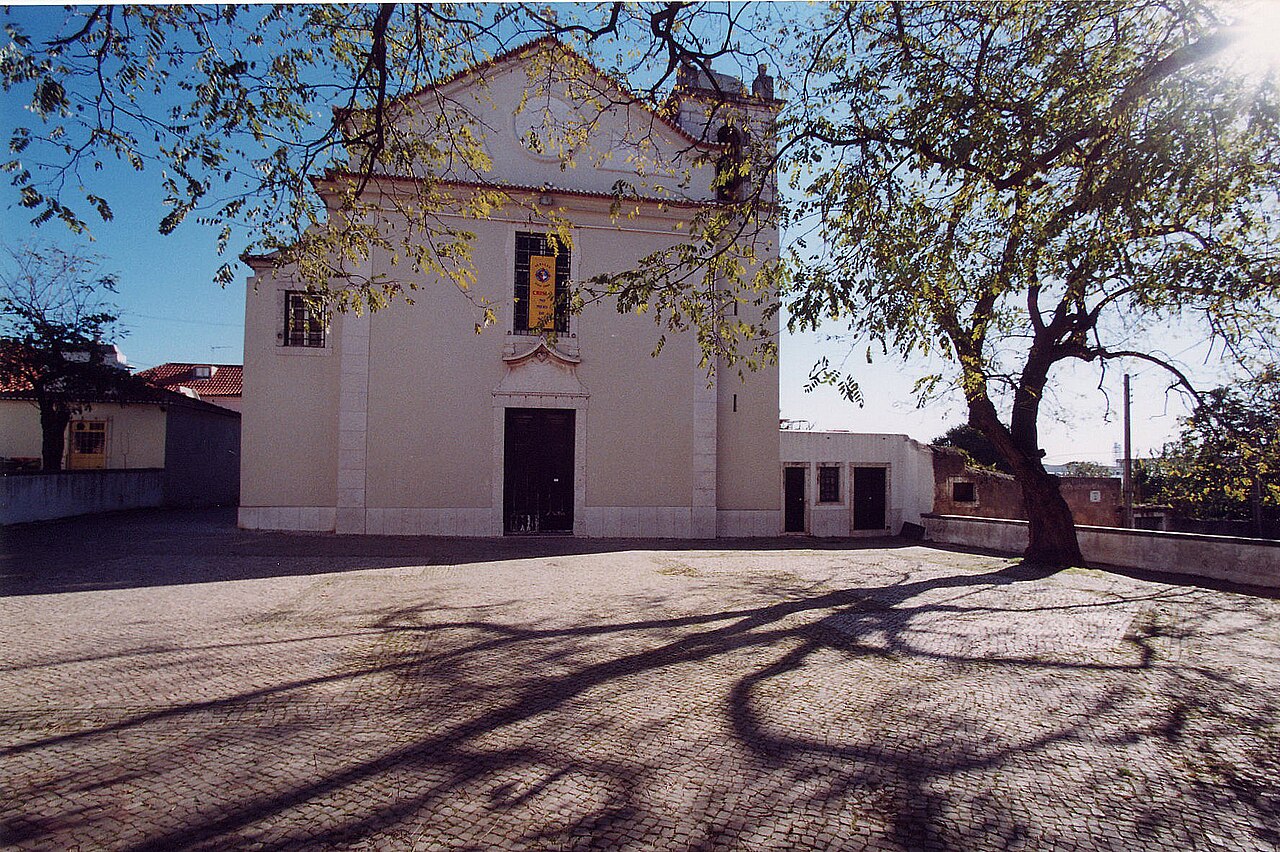
The parish is established and an early church is built.
 XIAOXIONGMARKETLIS-010 / LISBOABack to the Lisbon story map ↗
CITY ANCHOR 010 · OLIVAIS
Olivais.
The city grows,
yet the common well still needs care.
A district may change shape, but shared life still needs a centre to return to.Begin in 1397 ↓
01 / VERIFIABLE HISTORYFACTS BEFORE INTERPRETATION
The parish predates the modern city,
while church and square hold generations to one place.
The parish was created in 1397 and the church built in the early fifteenth century. After the 1755 earthquake, church and square were reorganised; a fountain and bandstand reinforced the public centre in the nineteenth century.
The destroyed church is rebuilt and the common square takes a new form.
A fountain and iron bandstand add new infrastructure to collective life.
Historical sourcesOfficial heritage register ↗Official institution · history ↗Wikimedia Commons · licences ↗
CITY ANCHOR AUDIT · v1.0
FORMAL ANCHORLIS-010 · FORMAL AUDIT PASSED
Official source
Public heritage, government, archive or responsible-institution records have been checked.
Independent support
At least one separate institutional, professional or academic source corroborates the dossier.
Time and place
Key dates, coordinates and administrative location can be checked against public records.
Facts kept separate
Verified building history is clearly separated from Xiaoxiong's contemporary Eastern reading.
Accountable review
The reviewing team, audit date and next review date are publicly recorded.
02 / THE TRAVELLER'S WAY IN
Do not look only at the church;
watch how people pass around it.
Jing asks whether a centre remains usable, cared for and accessible, not whether a monument stands alone.
A well matters not because it is old, but because it still gives water.
03 / EASTERN EDITORIAL READING · AN EASTERN WAY OF READING THE CITY
HEXAGRAM 48Hexagram 48JingWater over Wind · Jing
Commentary on the Image
“Water above wood: Jing.”
A common centre calls for work and mutual help.
Why do we read this historic centre
through Jing?
Jing represents a stable public resource. Parish, church, fountain and square create a centre to which people repeatedly return.
The centre stays
Expansion changes the surroundings, while church and square keep marking the historic core.
Space · The well does not moveInfrastructure keeps a centre alive
Fountain, bandstand and streets turn a symbol into practical public life.
Community · Draw and assistRebuilding preserves shared memory
Post-1755 work allowed the centre to keep serving without pretending nothing changed.
Time · Repair continuouslyKEEP WALKING WITH THIS HEXAGRAMAs a city expands outwards,
As a city expands outwards,
what still tells neighbours that they belong here?
Circle the square and see how church, fountain, bandstand and everyday pauses define a centre together.
FACT AND INTERPRETATION KEPT SEPARATE
The parish foundation, building dates, reconstruction and public facilities are verifiable facts. Jing is a contemporary reading about a common centre and continued use.
04 / WITHIN 3 KM OF CHURCH OF SANTA MARIA DOS OLIVAISSTORY BECOMES LOCAL LIFE
From a centre returned to for centuries
to the neighbourhood tables of Olivais.
Distances are recalculated from Church of Santa Maria dos Olivais. The public archive supports discovery but does not confirm trading status; check the map and opening hours before setting out.
ONE CITY · TWO ENTRANCESTravellers enter the neighbourhood,
Travellers enter the neighbourhood,
restaurant owners claim their own place.
Travellers continue from a story to a meal; restaurant owners begin with the public record, complete it and apply to join the Xiaoxiong network.
TRAVELLER MODE · ENTER THE NEIGHBOURHOODStart where you stand
Start where you stand
Walk three kilometres through Historic centre of Olivais.
Discover by distance, street and local flavour. First see where a place is and what it does; then choose a door you would like to open.
First 12 from Church of Santa Maria dos Olivais
We first exclude mass-market chains with little local discovery value, then rank by verified claim → verified official website and image → data health → distance. The website label and official image always appear together.
WALK, LOOK, THEN CHOOSE · 3 KM
See what is nearby. Which table today?
Restaurants unfold by distance from the city anchor. Records remain under review; confirm today's opening hours before setting out.
No. / RestaurantLocation and dataData statusNext action
Loading the restaurant directory within 3 km…
RESTAURANT OWNER ENTRY
After the meal, take a seat on this anchor's Bench →If this is your restaurant, claim its public record and complete the business details and image permissions. It formally joins this three-kilometre base only after identity and operating rights have been verified.
Find and claim my restaurant ↗